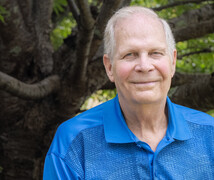
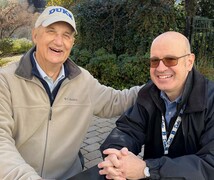
Dos décadas después de que Patrick Schultea se sometiera a un tratamiento para el cáncer de próstata, sus niveles de antígeno prostático específico (PSA) comenzaron a aumentar, lo que indicaba que el cáncer había regresado. Debido a que en un hospital local se le habían implantado diminutas semillas radiactivas en la próstata para tratar su primer episodio de cáncer, Schultea necesitaba un nuevo enfoque. Lo encontró en Duke Health. Hoy ha vuelto a renovar su casa de playa y a disfrutar de la vida con su familia.
Superar la reticencia inicial a la radioterapia
Cuando Schultea se enteró de que su cáncer había regresado y que la cirugía no era una buena opción, no estaba convencido de que la radioterapia fuera el mejor paso a seguir. Ya había recibido radiación y estaba un poco reacio a considerarlo de nuevo. Mucha gente le dirá que no lo hace dos veces, especialmente cuando todavía tiene restos de semillas implantadas.
Su forma de pensar cambió después de reunirse con el especialista en oncología médica de Duke Andrew Armstrong, MD, MSc y el especialista en oncología radioterápica Paul Koffer, MD. Schultea se sometió a estudios de imágenes y una biopsia, que revelaron que el cáncer no había regresado a la próstata, sino a la vesícula seminal izquierda, una glándula ubicada entre el recto y la vejiga.
La radioterapia se convirtió en una opción para mí", dijo Schultea.
Un objetivo claro sobre el enemigo
El Dr. Koffer recomendó la radioterapia corporal estereotáctica (SBRT, sigla en inglés), que consiste en administrar dosis de alta concentración de radiación en un acelerador lineal especializado. A diferencia de la SBRT tradicional, que utiliza una tomografía computarizada para planificar el tratamiento, la SBRT adaptativa permite a los médicos modificar los planes de radiación en tiempo real para tener en cuenta los cambios en el tamaño o la anatomía del tumor de un paciente. Esto es especialmente valioso al tratar órganos como las vesículas seminales, que pueden moverse significativamente según la forma y la ubicación del recto y la vejiga cercanos.
La SBRT adaptativa ayuda a garantizar que cada tratamiento se adapte a la anatomía del paciente el día del tratamiento, en lugar de depender de una exploración obtenida días o semanas antes", dijo el Dr. Koffer. Al adaptar el plan de tratamiento cuando el tumor o los órganos cercanos se han desplazado, podemos proteger mejor los tejidos sanos mientras mantenemos una focalización precisa en el cáncer. Esto da a las personas mayor confianza de que se administra la dosis deseada al cáncer mientras se reduce la radiación innecesaria a los órganos circundantes.
Schulter lo describió en términos moldeados por su experiencia militar como ex oficial de vuelo naval que voló P-3 Orion y rastreó submarinos rusos desde el aire: "Había un término llamado 'tropas al aire libre'." Eso significaba que tenía un objetivo claro en el enemigo. Eso es lo que se sintió. Las células de cáncer estaban a la intemperie y a la espera de ser golpeadas.
La precisión era fundamental
Debido a las semillas residuales del tratamiento anterior de Schultea, la precisión era fundamental, y la capacidad del sistema para refinar el plan de tratamiento en tiempo real permitió a los médicos evitar las áreas previamente irradiadas mientras se enfocaban en el nuevo objetivo.
"Es lo bello de esto", dijo Schultea. Pueden adaptarse si lo necesitan. No está golpeando algo que no tiene la intención de golpear, ya sea tejido sano o los restos de semillas. Hay una gran cantidad de bienes raíces valiosos en esa parte del cuerpo, y no querrá dañarlo si no es necesario. Esta técnica le permite ser preciso, y eso marca la diferencia.
Interrupción mínima de la vida cotidiana
A diferencia de la radioterapia convencional, que puede requerir docenas de tratamientos durante varias semanas, el curso de Schultea consistió en cinco sesiones que duraron unos 30 minutos cada una. La interrupción en su vida cotidiana fue mínima.
No es invasivo, y cuando termina, ya está", dijo. No creo que haya tenido ningún efecto secundario de mi tratamiento. Si los hay, han sido muy suaves y consistentes con lo que todavía tengo de las semillas.
Disfrutar de la vida después del tratamiento
Después de completar el tratamiento, Schultea se encuentra en un período de observación cuidadosa. Está haciendo un seguimiento de sus niveles de PSA hasta que complete los estudios de imágenes de seguimiento, y está viviendo la vida plenamente, incluyendo un viaje reciente con su esposa al Salón de la Fama del Rock & Roll en Cleveland, Ohio; renovando su casa de playa en Beaufort, Carolina del Norte, que ha pertenecido a la familia desde 1929; y remando botes como parte del Club de Remo de Beaufort Oars.