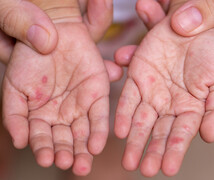
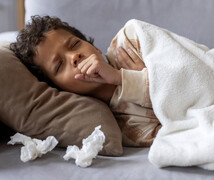
Se han reportado casos de sarampión y exposición en varias ubicaciones del triángulo. Es importante que verifique su estado de vacunación contra el sarampión para garantizar que esté al día.
El sarampión es un virus muy contagioso que se transmite por el aire cuando una persona infectada tose, estornuda o respira. Si usted estuvo en una ubicación con alguien que se sabe que tiene sarampión, es posible que haya estado expuesto y que pueda ser contagioso antes de que aparezcan los síntomas.
Si bien no se han reportado casos de sarampión en ninguna de las ubicaciones de Duke Health, la prevención de infecciones de Duke está haciendo todo lo posible para monitorear la situación y minimizar el riesgo para la salud pública. Aquí, Ibukun C. Kalu, MD, especialista en enfermedad infecciosa pediátrica de Duke Health, responde las preguntas más frecuentes.
Me preocupan los casos de sarampión en la zona. ¿Qué debo hacer para protegerme y proteger a mi familia?
Asegúrese de que sus vacunas estén actualizadas. Si usted y los miembros de su familia han recibido dos dosis de la vacuna contra el sarampión, paperas y rubéola (MMR), usted está protegido. Si ha recibido una dosis de la vacuna MMR, comuníquese con su proveedor para solicitar la segunda dosis de la vacuna.
Si no ha estado expuesto ni se ha vacunado, reciba la vacuna ahora. Las vacunas están disponibles a través de su médico y en muchas farmacias locales.
Si piensa que ha estado expuesto pero nunca se ha vacunado, comuníquese con su proveedor de inmediato. Es importante que usted reciba la vacuna dentro de 3 días de haber estado expuesto. Esto puede evitar que usted contraiga sarampión.
¿Qué hago si no estoy seguro de si o cuándo me vacunaron contra el sarampión?
Si usted nació antes del 1957 y fue vacunado, es probable que tenga protección. Si usted nació entre el 1957 y el 1971, es posible que la vacuna que recibió no haya sido tan confiable. Consulte con su médico si ha sido vacunado correctamente. Verifique su estado inmunológico.
Estuve en una ubicación donde se confirmó un caso de sarampión. ¿Qué puedo hacer?
Comuníquese con su proveedor de inmediato y comuníquele su inquietud. Tomarán las precauciones adecuadas. La exposición puede ocurrir sin estar cerca del individuo. Síntomas, incluidos fiebre, tos, ojos rojos o llorosos, o sarpullido, pueden tardar hasta dos semanas en aparecer.
¿Qué debo hacer si tengo síntomas?
Póngase en contacto con su proveedor de inmediato y comuníquele lo que está experimentando. No ingrese al consultorio de su médico, a la sala de emergencias o a atención de urgencias sin notificarles, ya que la enfermedad es muy contagiosa. Llame con anticipación y hágales saber por qué desea ser atendido. Es posible que su proveedor le vea virtualmente o en persona para clasificarle adecuadamente y recomendarle los próximos pasos.
Tengo inmunodeficiencia. ¿Cómo puedo protegerme?
Si usted tiene inmunodepresión y no puede recibir la vacuna MMR, asegúrese de que todas las personas a su alrededor estén completamente vacunadas y evite las áreas públicas o concurridas.
Si cree que ha estado expuesto al sarampión, comuníquese con su proveedor de inmediato. Debido a que usted está en alto riesgo, puede recibir inmunoglobulina, anticuerpos contra el virus del sarampión. Debe administrarse dentro de 6 días de haber estado expuesto. Esto puede prevenir o disminuir la gravedad del sarampión.
¿Dónde puedo obtener más información?
El Departamento de Salud y Servicios Humanos de Carolina del Norte ofrece información extensa sobre el sarampión, las exposiciones locales y más.
Dr. Ibukun Kalu, especialista en enfermedades infecciosas pediátricas, responde algunas de las preguntas más comunes de las familias sobre cómo proteger a los niños del sarampión.